

Effluent Treatment Plant
Green Technology BD specializes in the design, supply, and installation of advanced Effluent Treatment Plants (ETPs) tailored to meet the specific needs of various industries. Our ETP systems ensure the safe discharge or reuse of industrial wastewater by removing harmful contaminants, complying with environmental regulations, and promoting resource recovery. With cutting-edge technologies like MBBR, SBR, MBR, and advanced oxidation, we deliver efficient, reliable, and cost-effective solutions for industries such as textiles, garments, pharmaceuticals, leather, and chemicals.
ETP Process – At a Glance
- Physico-Chemical Treatment
- Biological Treatment
- MBBR (Moving Bed Biofilm Reactor)
- SBR (Sequencing Batch Reactor)
- MBR (Membrane Bioreactor)
Reliable & Sustainable Water Solutions
Green Technology BD aims to provide the most reliable and cost-effective water and wastewater treatment solutions. Every project is delivered with full compliance to environmental standards and includes expert consultation and support. We always keep a close eye on quality and sustainability.
Physico-Chemical Treatment
This is the preliminary treatment stage, especially for wastewater with high Total Suspended Solids (TSS), turbidity, color, and heavy metals.
- Coagulation & Flocculation: Chemicals (like alum, PAC, or ferric chloride) are added to destabilize suspended particles. Flocculants help form larger particle clusters (flocs).
- Settling (Primary Clarification): Flocs settle in a clarifier or sedimentation tank.
- pH Correction: Acid or alkali is dosed to neutralize the pH for downstream biological processes.
- Oil & Grease Removal: If needed, an oil trap or dissolved air flotation (DAF) system is used.
Biological Treatment
Natural Microbial Process for Organic Waste Removal
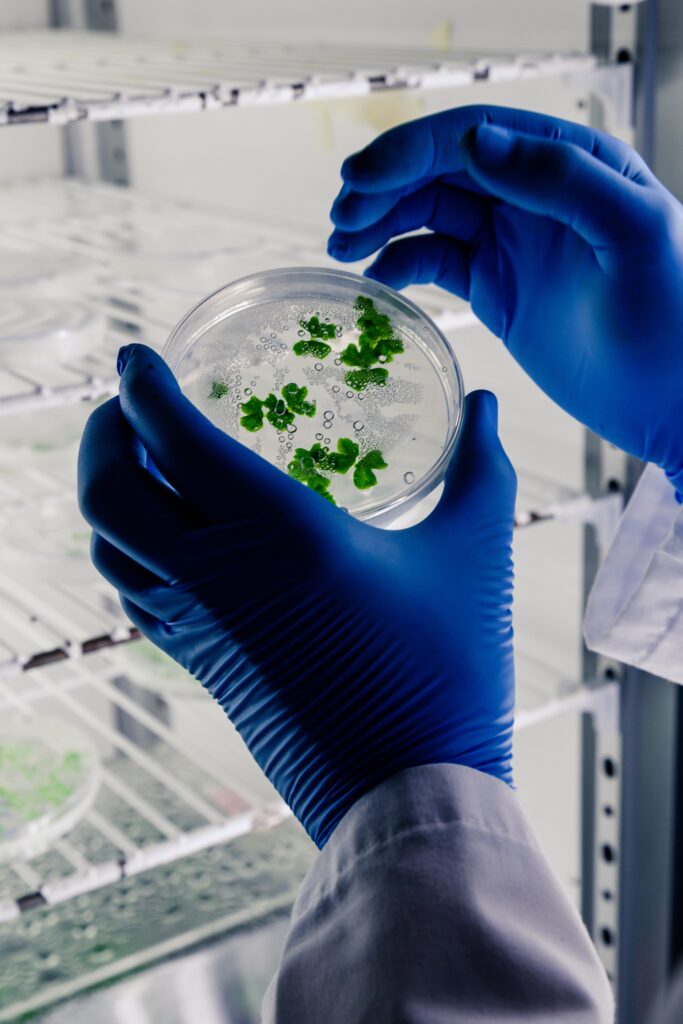
Biological treatment is the heart of modern wastewater treatment systems. It uses naturally occurring or cultivated microorganisms (bacteria and other microbes) to break down and remove organic pollutants such as BOD (Biochemical Oxygen Demand), COD (Chemical Oxygen Demand), nitrogen, and phosphorus from wastewater.
This process mimics the natural decomposition that occurs in rivers or soil, but under controlled and accelerated conditions inside treatment tanks.
How It Works:
- Wastewater is aerated to provide oxygen that supports microbial activity.
- Microorganisms consume organic matter and convert it into carbon dioxide, water, and biomass (sludge).
- Treated water is clarified, and sludge is separated for further handling.
Common Biological Treatment Systems
1. MBBR (Moving Bed Biofilm Reactor)
Compact, Efficient, and Easy to Operate
MBBR is a highly effective biological treatment process that uses specially designed plastic bio-media suspended in an aeration tank. Microorganisms attach to the surface of the media and degrade organic pollutants in the wastewater.
MBBR is a highly effective biological treatment process that uses specially designed plastic bio-media suspended in an aeration tank. Microorganisms attach to the surface of the media and degrade organic pollutants in the wastewater.
Key Features:
- High BOD/COD removal efficiency in a small footprint
- Low sludge production and maintenance
- No need for sludge recycling or backwashing
- Tolerant to shock loads and flow variations
Best For: Textile, food, chemical, and mixed industrial effluents with space constraints.
2. SBR (Sequencing Batch Reactor)
Time-Based, Automated Biological Treatment
SBR is a fill-and-draw activated sludge system where wastewater is treated in batches using a single tank for all treatment phases: Fill → React (Aerate) → Settle → Decant. This allows precise control of treatment time and quality.
SBR is a fill-and-draw activated sludge system where wastewater is treated in batches using a single tank for all treatment phases: Fill → React (Aerate) → Settle → Decant. This allows precise control of treatment time and quality.
Key Features:
- All treatment steps in one tank
- High flexibility in handling variable loads
- Fully automatic operation with PLC/SCADA
- Excellent performance in nitrogen and phosphorus removal
Best For: Residential and institutional STPs, and industries with fluctuating wastewater volumes.
3. MBR (Membrane Bioreactor)
Advanced Treatment for High-Quality Reuse
MBR combines traditional biological treatment with membrane filtration (ultrafiltration or microfiltration), producing crystal-clear, pathogen-free water suitable for reuse. Key Features:
MBR combines traditional biological treatment with membrane filtration (ultrafiltration or microfiltration), producing crystal-clear, pathogen-free water suitable for reuse. Key Features:
Key Features:
- Very high effluent quality (TSS < 1 mg/L, BOD < 5 mg/L)
- Compact design with minimal footprint
- No need for secondary clarifier or tertiary filter
- Ideal for water recycling and ZLD applications
Best For: Hospitals, hotels, high-rise buildings, and industries with reuse requirements or space limitations.